Haagen-dazs's low-fat frozen yogurts are a must-try!:-) These two flavours are my favourite:-

Wildberry

Vanilla raspberry swirl

Having been brought up alongside the Chinese yum cha culture, wherein Sunday morning breakfasts are about 'dim sums and chinese tea', I have grown somewhat immuned to the intrigues of dim sums.
For the past 5 years, I have hardly uttered "wahlauyeh" more than twice, over a meal of dim sum specialties.
Reasons: Being a healthy-eater, I hate MSG-laden stuffs. I also have a very strong psychological reaction to pork-fat cubes, and will spend minutes separating those crystalline substance from a char siew pau or siew mai before attempting a bite. What irks me most is the sight of prawn intestines in har mais (prawn dumplings). Eewww!
So, imagine my delight at having had a very "wahlauyeh" dining experience at the Luk Yu Tea House (located at the Starhill Gallery).
Reasons:
a) Very little MSG content.
b) No prawn intestines brought to our dining table
c) No unsightly fat cubes in my siew mai and wu kok (fried yam puff)
d) Pure, fragrant, unadulterated chinese tea (This is a must for my Dad!)
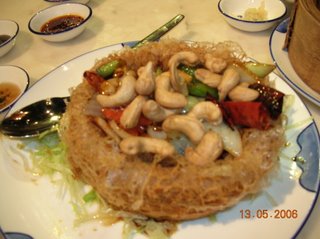
Fried Squid with Dried Chillies and Cashew Nuts in Toro Basket
Comments:
Piping hot yam dough served with a generous topping of crunchy cashew nuts.
Yum. Yum. Yummmm Seng!
Deep-fried Yam Puff with Chicken and Mushrooms
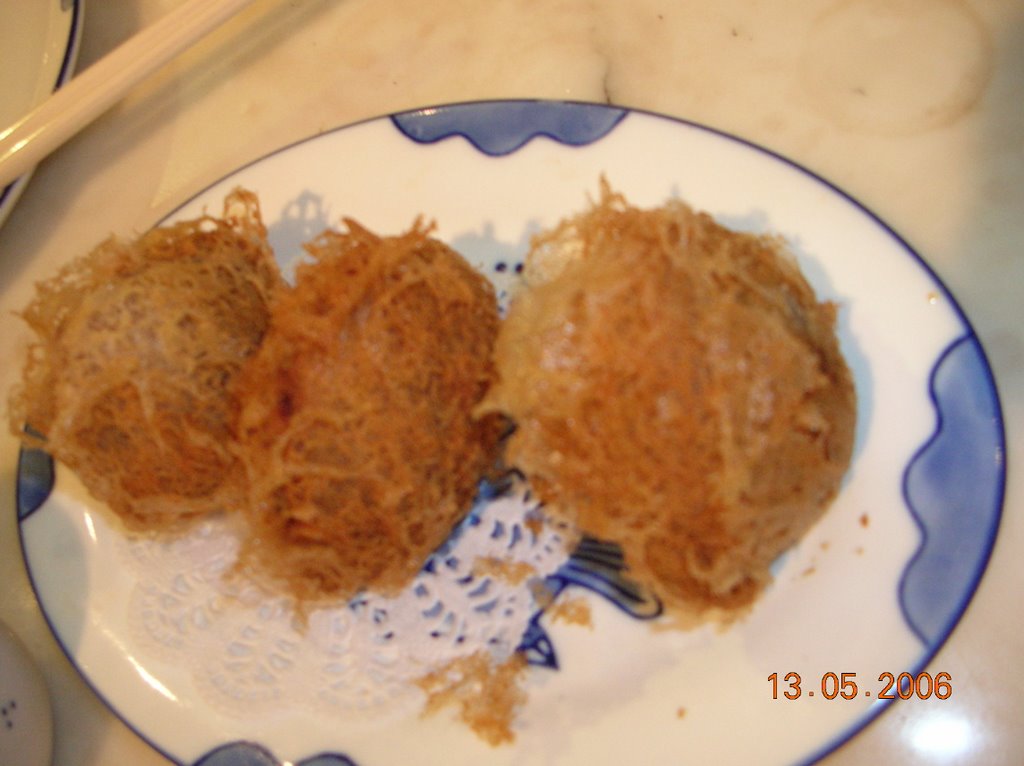
Soft and creamy yam paste oozes out of the crispy outer layer, as you sink your teeth into this delicious goodie. Fragrant, light brownish filling (unlike the usual kicap-infused variety) minus the gooey pork-fat cubes. Thank heavens, Luk Yu chefs do not have the habit of substituting pork-fat with chicken skins.
Steamed Shanghainese Crabmeat Dumpling "xiao long pau"
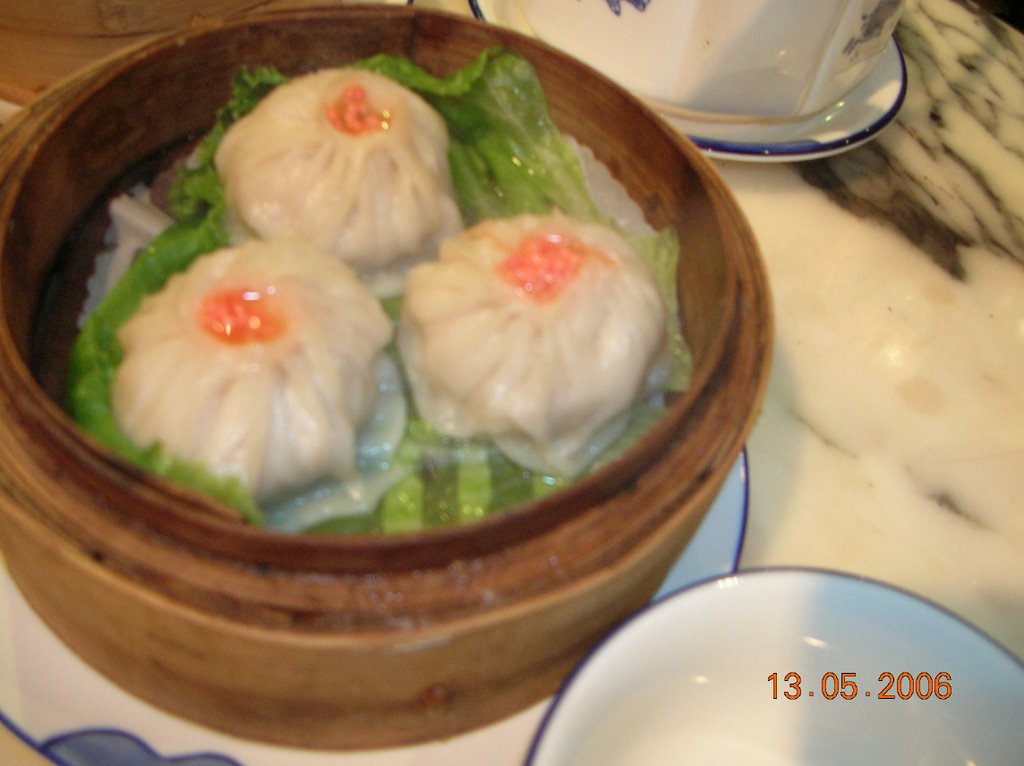
So good... that I even ate the dainty piece of cabbage placed undearneath the xiao long paus.
Steamed Chicken and Prawns Dumplings "siew mai"
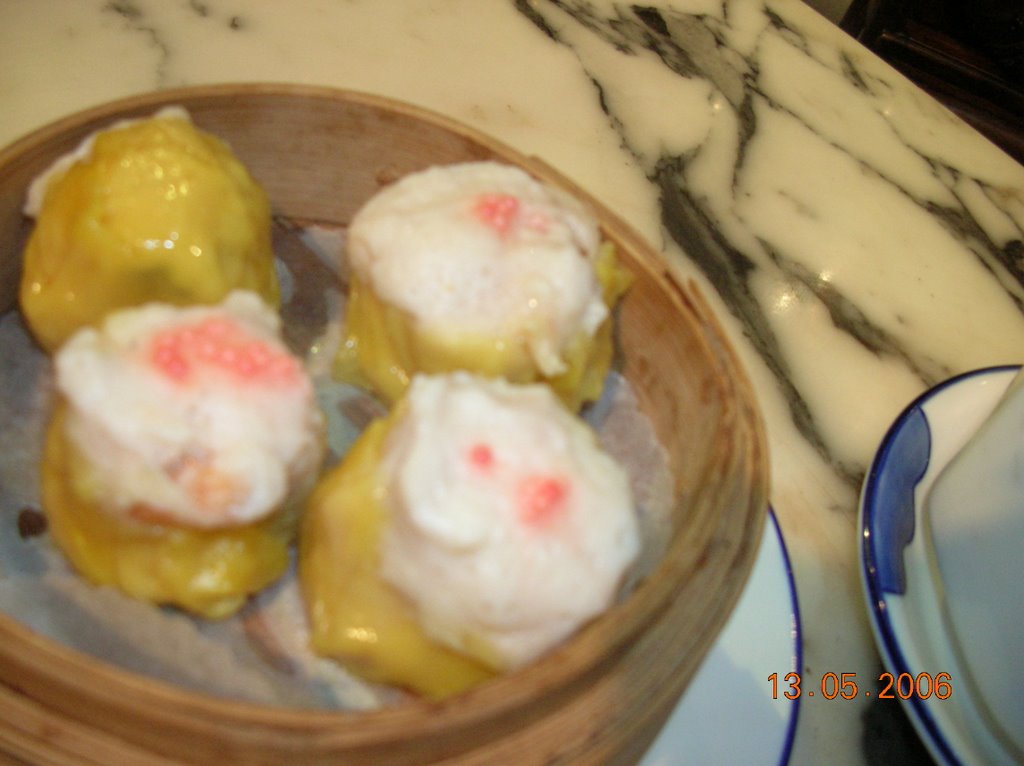
No pork fat cubes and excessive salt and MSG. Fresh and 'unadulterated' prawns!
The prawns in almost all dim sum dishes I have tried in Malaysia have got a very unnatural cruchiness - somewhat like the texture of jellyfish.
Could that have been the work of some food preservatives (e.g. boric acid)? Well, I do not know. I don't really wish to know, either.
Anyhow, I hope my guess is wrong.
Pan-fried Shanghainese Dumpling with Chicken
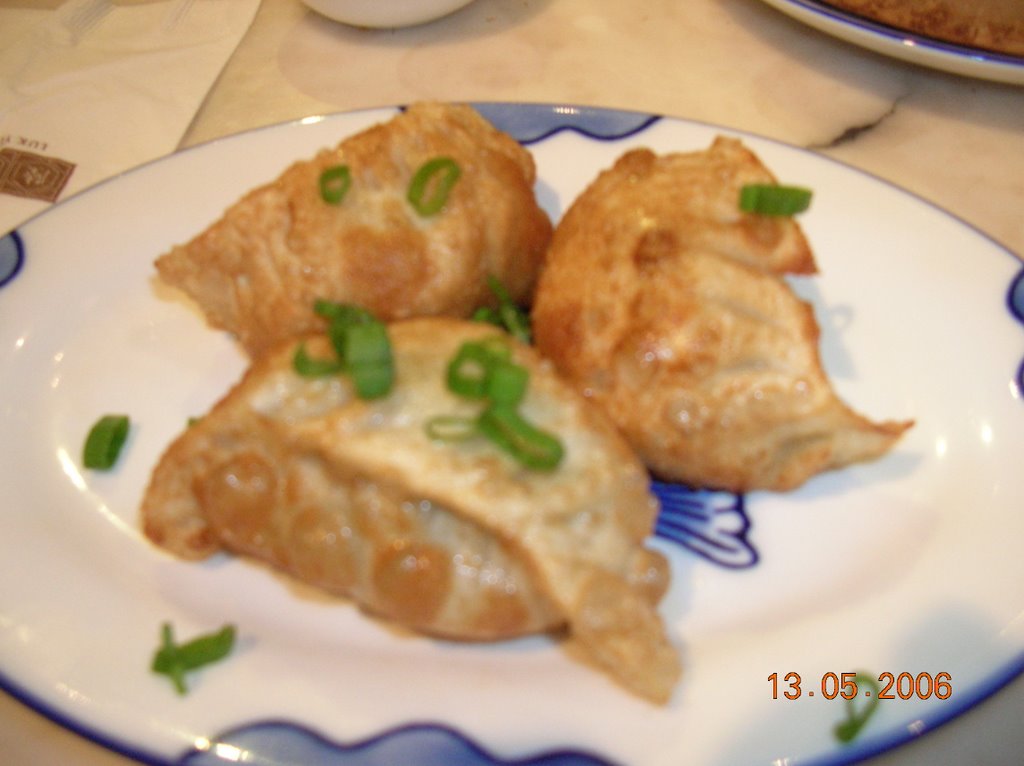
(Gyouza)
This is a must-try!
Generous amount of chicken meat and herb wrapped in freshly-made gyouza skin.
Finally, I have found gyouzas that do not make me cringe!
Luk Yu's gyouzas do not
a) drip with oil
b) squirt oily brine when you bite into it
c) have the bitter alkali taste of the usual gyouzas
It is a public misconception that halal dim sums are inferior to non-halal dim sums, as how chick-kut-teh is inferior to bak-kut-teh.
Well, I beg to differ.
Luk Yu Tea House has tried, very successfully, to make yum cha an enjoyable experience for the Muslim community and us health freaks in Malaysia.


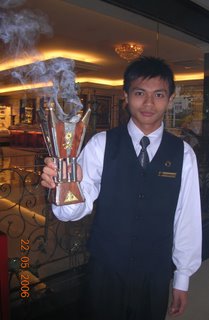 Hafiz greeting patrons with the refreshing scent of kemenyan-like incense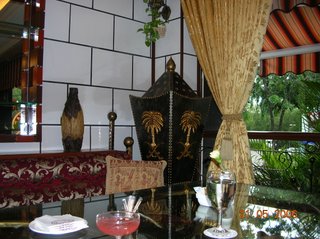
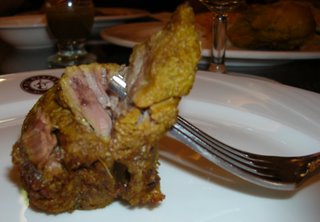
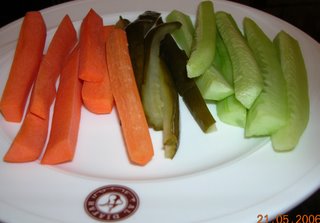
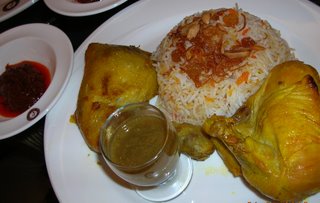
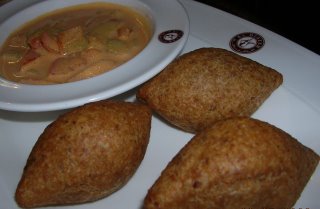
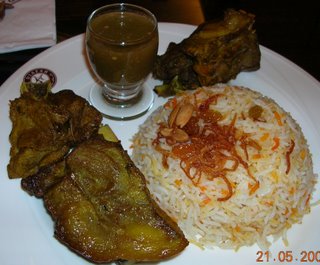
Kibbeh
Gosh! I miss those days when Mum and I would make 'popia' (spring rolls) for the family on weekends.

Pic 1: Ingredients for 'popia'
Clockwise, from bottom Left: Lettuce, Fried onions, chopped peanuts, beancurd (grilled and shredded), 'char siew' (roasted pork), carrots, eggs, bolied shredded yambeans, and 'popia' wraps


What is Popia?
Popia is a type of chinese spring roll with a very flat and thin surface, and round in shape. It's tasteless unless you stuffed it with ingredients on your choice, turning it into a delicious spring roll.
The most popular fillings are like yam bean, salad, bean sprouts, carrots, etc. It used to be a Chinese favorite. But now, even the Malays are trying their ways to make the food in their own style. There is just no right or wrong method in making a tasty food in Malaysia sometimes.
Similar food in other cuisines include the Filipino variant referred to as Lumpiang Sariwa, fried spring rolls (Chinese) and fajitas (Tex-Mex). In Vietnam, bò bía is the Vietnamese version of popiah, introduced by Teochew (Chaozhou) immigrants.